


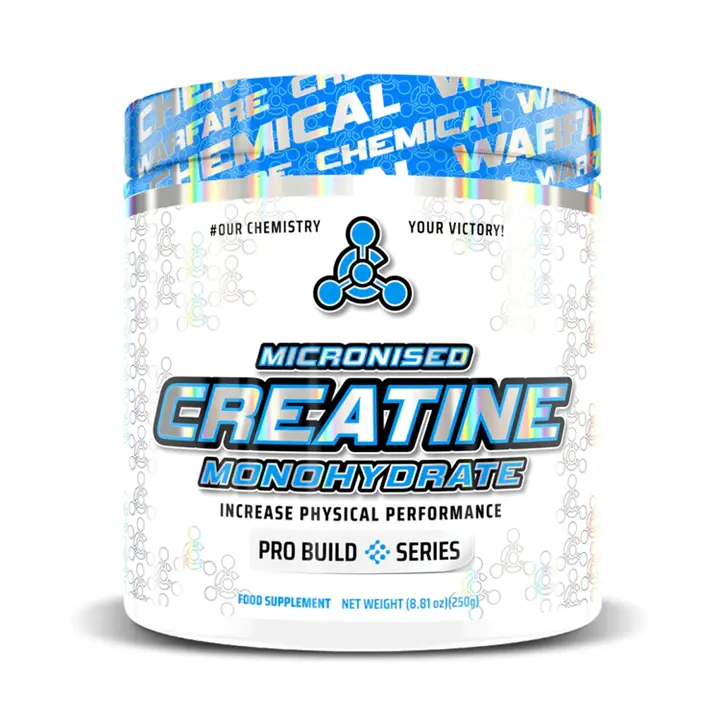
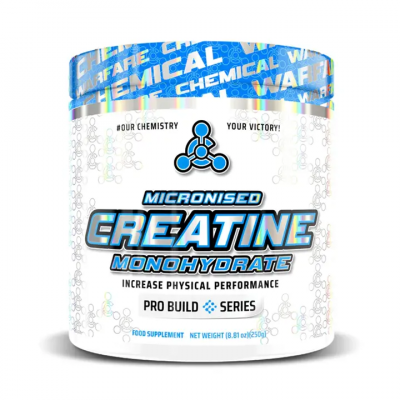

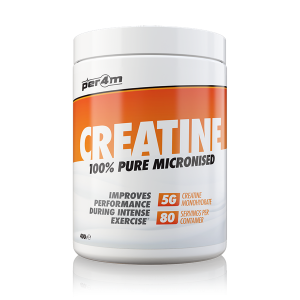
Chemical Warfare Creatine Monohydrate 500g
Chemical Warfare Creatine Monohydrate 500g is the classic, boring-in-the-best-way supplement: no flashy “matrix,” no mystery blends — just micronised creatine monohydrate. And boring is a compliment here, because creatine is one of the most researched performance supplements on the planet.
What creatine actually does
During short, high‑intensity efforts (think heavy sets, sprints, hard intervals), your muscles rely heavily on a rapid energy system that uses ATP. Creatine helps increase the availability of phosphocreatine in muscle, which supports ATP regeneration during repeated bouts of intense effort. In plain English: it helps you squeeze out that extra rep, keep power output higher for longer, and recover a bit faster between hard sets.
Why “micronised” matters
Micronised creatine simply means the powder particles are smaller. The practical benefit is usually mixability — it tends to blend more smoothly in water or a shake and can be easier to drink daily. The performance ingredient is still creatine monohydrate.
Who this is for
- Strength training: If you lift weights, creatine is a sensible foundational supplement.
- High‑intensity sport: Football, rugby, MMA, HIIT, sprint work — anything with repeated bursts.
- Building muscle: By helping you train harder and more consistently, creatine supports the training stimulus that drives progress.
- Beginners: Creatine isn’t “advanced.” It’s one of the simplest starting supplements.
How to take creatine (simple and effective)
Most people do best with a consistent daily routine. Typical use is:
- 3–5g daily, every day (training or rest days).
- Mix with water, juice, or add it to a shake.
- Timing is flexible. If you’ll remember it after training, take it then. If mornings are easier, do mornings.
Some people choose a “loading phase” (higher dose for a few days) to saturate faster, but it’s not required. Daily consistency is what matters.
Hydration and routine
Creatine works best when your basics are solid: hydration, protein, sleep, and consistent training. If your water intake is low, fix that first. If your training is random, creatine won’t magically make it disciplined. Supplements are add‑ons, not replacements for fundamentals.
How to stack it
Creatine stacks well with the “boring but effective” basics:
- Whey protein to help hit daily protein targets.
- Pre‑workout (if you use stimulants responsibly) for training energy.
- Electrolytes if you sweat heavily or train in hot conditions.
If you’re already using a pre‑workout that includes creatine, check the dose — you may not need extra.
FAQs
Will creatine make me gain fat?
No. Some people notice a small increase in scale weight early on due to water stored in muscle. That’s not fat gain.
Do I need to cycle creatine?
No. Most people take it consistently. If you stop, muscle creatine levels gradually return toward baseline over time.
When should I take it?
Any time you’ll remember. Consistency beats perfect timing.
Is it suitable for beginners?
Yes. Creatine is one of the simplest, most evidence‑supported supplements for strength and high‑intensity training.
Is it safe?
Creatine monohydrate is widely studied. If you have kidney disease, are under medical supervision, pregnant, breastfeeding, or under 18, speak to a healthcare professional before use.
Disclaimer: Food supplements should not be used as a substitute for a varied, balanced diet and a healthy lifestyle.
Pro tip: If you’re forgetting daily creatine, keep the tub next to something you never forget (coffee, shaker, toothpaste). Habit engineering beats motivation.
Common questions people worry about
“Will it bloat me?” Some people retain a little more water inside the muscle early on. That’s normal and often settles. If you want to stay “tight,” keep your water intake consistent and don’t panic‑diet because the scale moved.
“Do I need carbs with it?” No. Creatine works through consistent daily intake; taking it with a meal can simply make it easier to remember.


Reviews
There are no reviews yet.